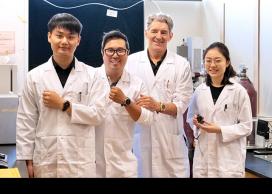
UBC researchers help detect the most massive black hole collision ever observed

8 September, 2020

An international team of researchers, including scientists with the University of British Columbia’s gravitational wave astrophysics group, has detected a signal from what may be the most massive black hole merger yet observed. The discovery, outlined in papers published today in Physical Review Letters and The Astrophysical Journal, raises a slew of new questions about the nature of black hole formation, and upends previously held theories about how big holes can get.

Read more


  • Research
  • University news
  • Media release

Find the latest news, updates, events, and useful dates from across UBC, curated for faculty and staff by Internal Communications.
Access a library of resources from multiple UBC websites, all in one place.

UBC Crest The official logo of the University of British Columbia. Urgent Message An exclamation mark in a speech bubble. Arrow An arrow indicating direction. Arrow in Circle An arrow indicating direction. Caret An arrowhead indicating direction. Time A clock. Chats Two speech clouds. Facebook The logo for the Facebook social media service. Feedback Dots inside a speech bubble, indicating discussion. Information The letter 'i' in a circle. Instagram The logo for the Instagram social media service. Lightbulb A lightbulb inside a circle. Linkedin The logo for the LinkedIn social media service. Location Pin A map location pin. Mail An envelope. Menu Three horizontal lines indicating a menu. Minus A minus sign. Parking The letter 'P' inside a circle. Telephone An antique telephone. Play A media play button. Plus A plus symbol indicating more or the ability to add. Search A magnifying glass. Submit content An inbox filled with paper. Team A group of people inside a circle. Twitter The logo for the Twitter social media service.